
Artifacts are belongings
A Western Pacific journey into fog that rolls in like little cat feet

I’ve been saying for years that data is an artifact of human experience - meaning it carries the fingerprints of its making, the context, the lineage of decisions. The exhaust of the maker, that the mechanism contains the meaning, is inseparable. This came from my archaeology training, and it’s foundational to Bast.
But in Vancouver, something shifted.
At the SFU Museum of Archaeology and Ethnology, the curator - an anthropologist - explained how they approach Indigenous collections. And she was so clear about this: these aren’t artifacts in our care. They’re belongings. They’re displayed with consent. They maintain a relationship with their communities of origin. The ownership and meaning stay with the people whose ancestors created them.
Artifacts can be studied, cataloged, and possessed by institutions. Belongings require consent and an ongoing relationship.
Data isn’t an artifact of human experience. Data is a belonging of human experience.
Fuck! I have to change my slide:
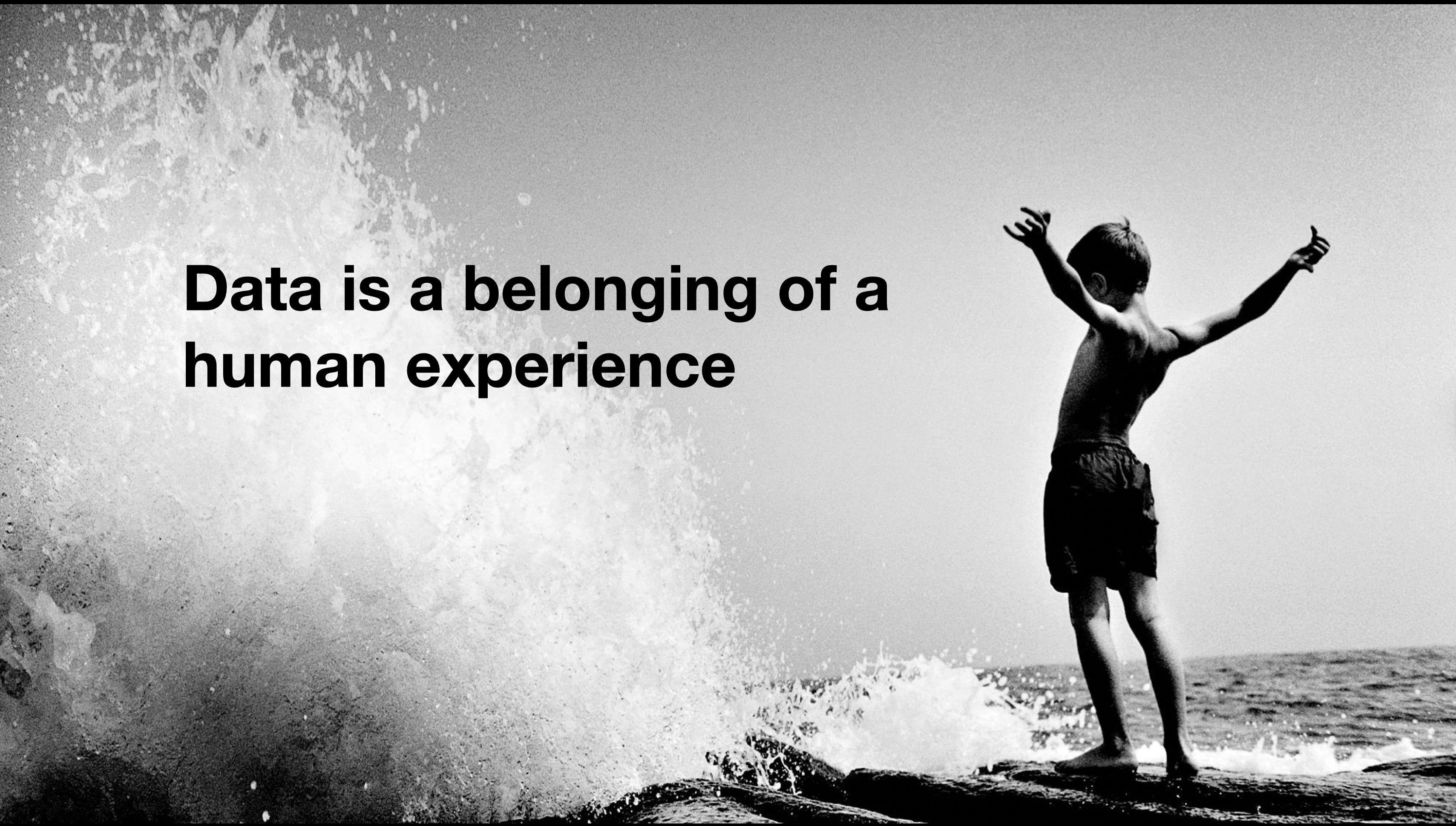
This isn’t just language. When data is an artifact, we extract it, store it, analyze it, own it. When data is a belonging, we’re in relationship with it - and with the people whose experience created it. Consent isn’t one-time. Stewardship replaces ownership. Lineage isn’t metadata, it’s the ongoing connection to source.
Here’s what this means for AI: Humans can’t encapsulate their understanding against the whole. We know a banana is yellow but can’t articulate the boundaries of that knowledge or trace how we came to know it. We understand concepts intuitively but can’t position that understanding against what we don’t know. LLMs have the opposite problem - vast positional knowledge with no conceptual boundaries, no way to reason about structural relationships or formulate testable hypotheses.
Bast creates the explicit ontological context that grounds human understanding against evidence. The ontology works three ways: 1) as metadata and lineage map, 2) as a context filter, and 3) as a conceptual hierarchy. This structure makes it possible to see knowledge positioned against a defined whole, trace the structural relationships that ground empirical claims, and reason from what we know to what must exist in the gaps - like an archaeologist who finds a depression in the strata and can surmise what post stood there, how it was used, what weight it bore.
When you can encapsulate understanding against the whole, you can generate testable hypotheses instead of just plausible continuations. You can ask well-formed questions instead of pattern-matching from frequency. You can maintain the belonging relationship between conclusions and the humans whose experience created the underlying data.
The honest mess of traceable reasoning isn’t transparency theater - it’s respecting that data belongs to someone. The lineage and provenance aren’t overhead; they’re the stratigraphy of knowledge itself.
Dave Snowden gave me the framework to see this during three days at his Cynefin workshop, where we all stayed in an Airbnb and worked the event as owls and ravens. Watching him facilitate the Triopticon process - where eagles offer provocative perspectives from different disciplines, ravens in groups of three extract insights and make sense, and beavers recombine across groups to build concrete actions - I saw the causal relationship between creators with agency and what they create in a specific complex adaptive system, where the desired outcome is meaning-making itself.
Delia McCabe’s work on the neuroscience of connection keeps showing up in how I think about this: how we understand knowledge shapes what kind of knowledge systems we can create.
The mechanism matters. The lineage matters. Because data belongs to humans, not to our systems.
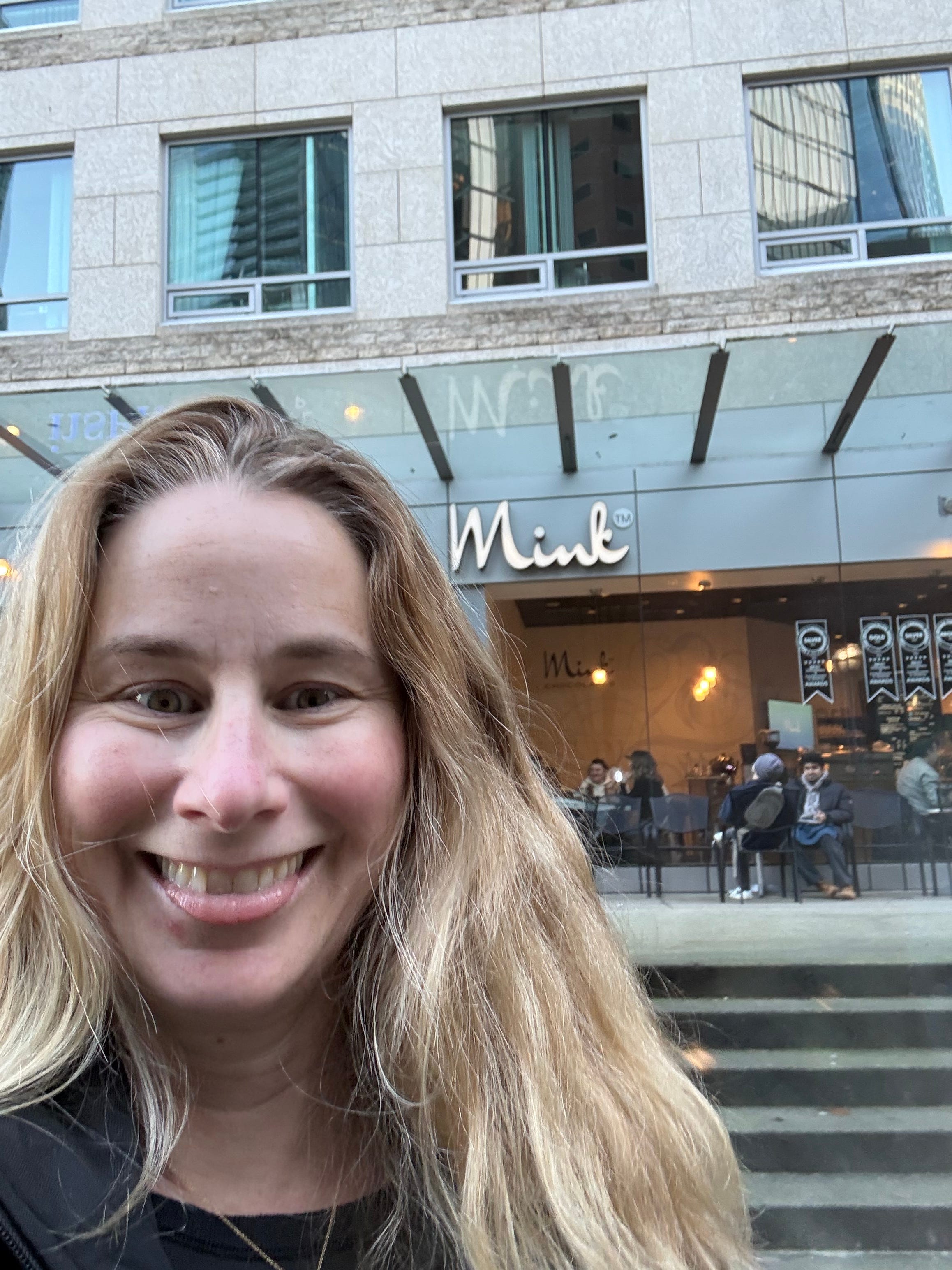
P.S. This is me in Vancouver outside Mink in all my unfocused glory - literally, because my glasses were “off” the entire trip, waiting for the optician to make my actual progressive frames. The tongue out is my teenager’s influence (she does this on Snapchat, and I copy what I really love the taste of) - which in this case is CHOCOLATE. Their drinking chocolate is YUM!